
Article: Banarasi Silk Sarees: The Ultimate Guide to Choosing the Perfect Saree
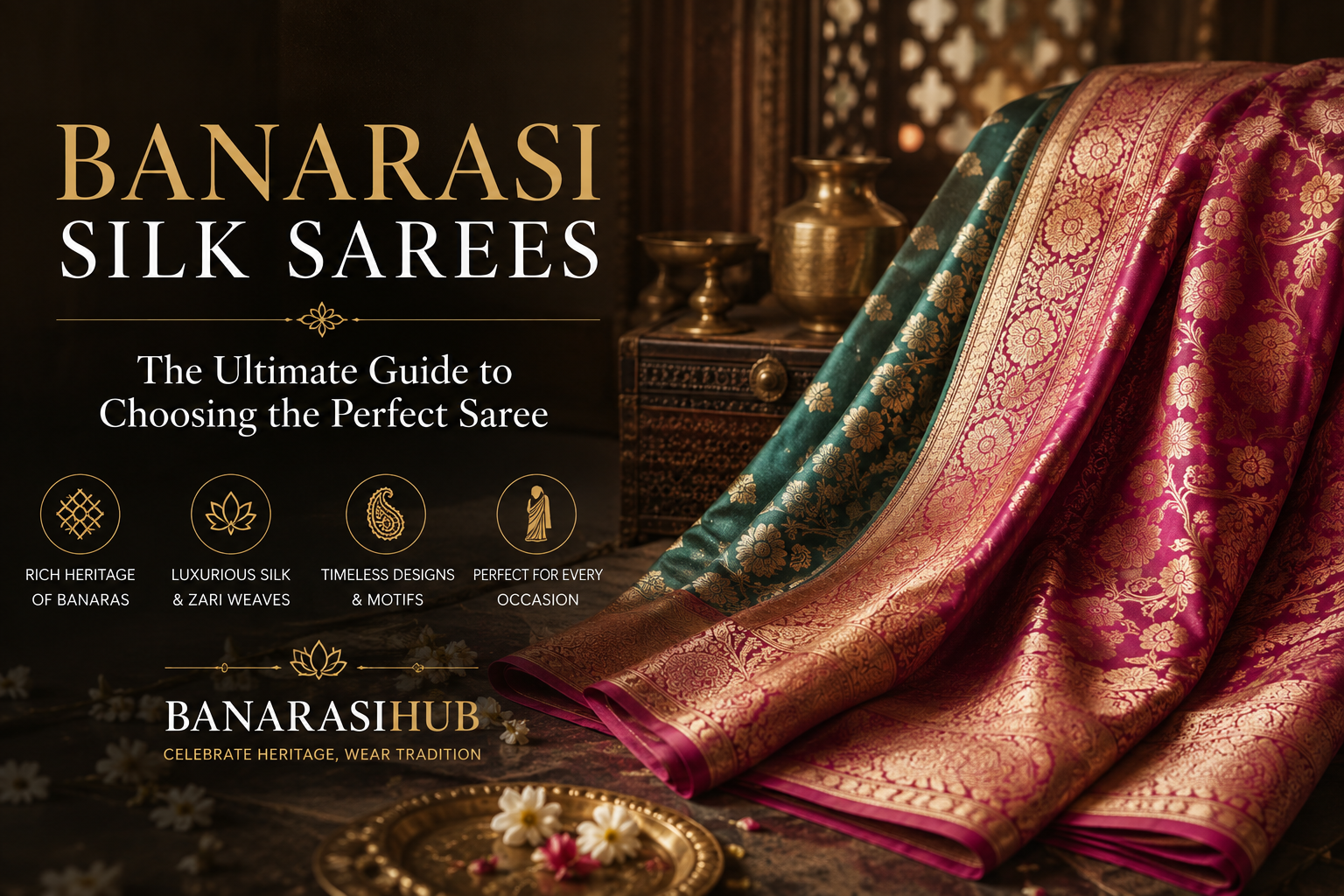
Banarasi Silk Sarees: The Ultimate Guide to Choosing the Perfect Saree
A Banarasi silk saree is one of India’s most timeless expressions of luxury, craftsmanship and tradition. Woven in the historic textile region of Varanasi, these sarees are admired for their rich silk, intricate zari work, detailed motifs and distinctive brocade patterns. Banaras Brocades and Sarees are a registered Geographical Indication product, reflecting the textile tradition associated with the region. (Varanasi District)
Whether you are shopping for a wedding, festival, reception or an heirloom saree, choosing the right Banarasi silk saree can feel overwhelming. There are different fabrics, weaves, motifs, zari qualities, colours and price points to consider.
This guide will help you understand the important factors so you can choose a Banarasi silk saree that suits your occasion, personal style and budget.
What Makes a Banarasi Silk Saree Special?
Banarasi sarees are known for their luxurious appearance and intricate weaving. Traditional Banaras sarees feature finely woven silk decorated with elaborate zari designs. The official Varanasi district website describes characteristic elements including floral and foliate motifs, kalga and bel, compact weaving, jali patterns, metallic effects and meenakari work. (Varanasi District)
The beauty of a Banarasi saree comes from the combination of:
* Fine fabric
* Intricate weaving
* Traditional motifs
* Zari craftsmanship
* Rich colours
* Detailed borders and pallus
This combination makes Banarasi silk a popular choice for brides, wedding guests and anyone looking for an elegant traditional saree.
1. Choose the Right Banarasi Silk Fabric
The first step is understanding the fabric.
Different Banarasi sarees can have different textures, weights and drapes. Katan silk, for example, is known for its smooth and refined appearance, while other Banarasi varieties can offer different textures and levels of softness.
When choosing a saree, consider how you want it to feel when worn.
If you prefer a structured and luxurious appearance, a richer silk with detailed zari can be ideal. If you want something lighter and easier to carry, consider a lighter Banarasi construction.
Always check the exact fabric description before purchasing, especially when shopping online.
2. Decide the Occasion
The occasion should influence your choice of Banarasi silk saree.
Wedding
For weddings, rich colours such as red, deep pink, maroon, wine, emerald and royal blue can create a traditional and luxurious appearance.
Heavy zari, elaborate borders and detailed pallus are particularly suitable for bridal and wedding celebrations.
Reception
For a reception, you can experiment with contemporary colours such as pastel pink, champagne, teal, powder blue, lavender or sophisticated jewel tones.
A Banarasi saree with a less dense pattern can create a refined modern look.
Festivals
For festivals, bright colours and traditional motifs work beautifully. Shades such as red, yellow, orange, green and magenta can create a vibrant festive appearance.
Formal Events
For formal occasions, consider elegant shades such as beige, ivory, black, navy, muted gold or deep green with restrained zari work.
3. Select the Right Colour
Colour can completely transform the appearance of a Banarasi silk saree.
Traditional colours remain popular because they complement Indian skin tones and occasion wear beautifully. However, modern Banarasi collections also include softer and more contemporary shades.
Consider your wardrobe before buying.
If you already own several bright sarees, a sophisticated neutral or pastel Banarasi may add variety. If you want a statement saree for weddings, a rich jewel tone or traditional red can be an excellent choice.
Also consider the blouse. A contrasting blouse can make the zari and motifs stand out, while a matching blouse creates a more classic appearance.
4. Understand Zari
Zari is one of the most important visual elements of a Banarasi silk saree.
The metallic detailing can dramatically influence the saree’s appearance, weight and price.
When selecting a saree, look at the density of the zari. A heavily decorated saree can create a grand bridal appearance, while a lighter zari design may be more versatile for repeated wear.
Don’t choose a saree simply because the zari looks shiny. Consider the quality, weaving, design definition and overall finishing.
5. Explore Traditional Banarasi Motifs
One of the joys of buying a Banarasi saree is discovering its motifs.
Popular traditional patterns include:
Butidar: Small motifs repeated across the body.
Booti: Small decorative motifs.
Boota: Larger individual motifs.
Jangla: Elaborate floral and vine patterns covering the saree.
Bel: Decorative creeper or vine designs.
Kalga: Traditional floral-inspired motifs.
Meenakari: Colourful detailing incorporated into zari designs.
These motifs allow you to choose between subtle elegance and dramatic traditional richness.
6. Choose the Right Border and Pallu
The border and pallu often determine how grand a saree looks.
A wide, heavily decorated zari border can create a dramatic wedding appearance. A narrower border can make the saree feel more contemporary and versatile.
The pallu is equally important. If you want a traditional statement, choose a saree with an elaborate pallu featuring detailed zari work.
For everyday or occasional festive wear, a simpler pallu can be easier to style.
When shopping online, always look at close-up photographs of both the border and pallu before making your decision.
7. Consider Handloom
If craftsmanship and traditional weaving are important to you, look for a genuine handloom Banarasi silk saree.
The Government of India’s Handloom Mark scheme provides a collective identity for handwoven products. Official Handloom Mark information says its labels feature a unique QR code that can be scanned to verify information associated with the handwoven product and its weaver. (Handloom Mark)
When buying an expensive saree, ask the seller whether it is handloom and request appropriate certification or product information.
8. Choose According to Your Body Type and Draping Style
There is no single Banarasi saree that suits everyone. The right choice depends on how you prefer to drape and style your saree.
If you prefer a more structured appearance, a silk saree with defined motifs and a strong border can work beautifully.
If you prefer a softer, flowing appearance, consider a lighter construction with a less dense design.
Vertical or elongated motifs can create a streamlined visual effect, while large motifs and broad borders create a more dramatic look.
Most importantly, choose something you feel comfortable wearing.
9. Think About Your Blouse
The blouse can change the entire look of a Banarasi saree.
For a traditional wedding appearance, consider a blouse with zari detailing, embroidery or a high neckline.
For a contemporary look, a simple silk blouse in a contrasting colour can create an elegant balance.
For heavily patterned sarees, keeping the blouse relatively simple can prevent the overall outfit from looking too busy.
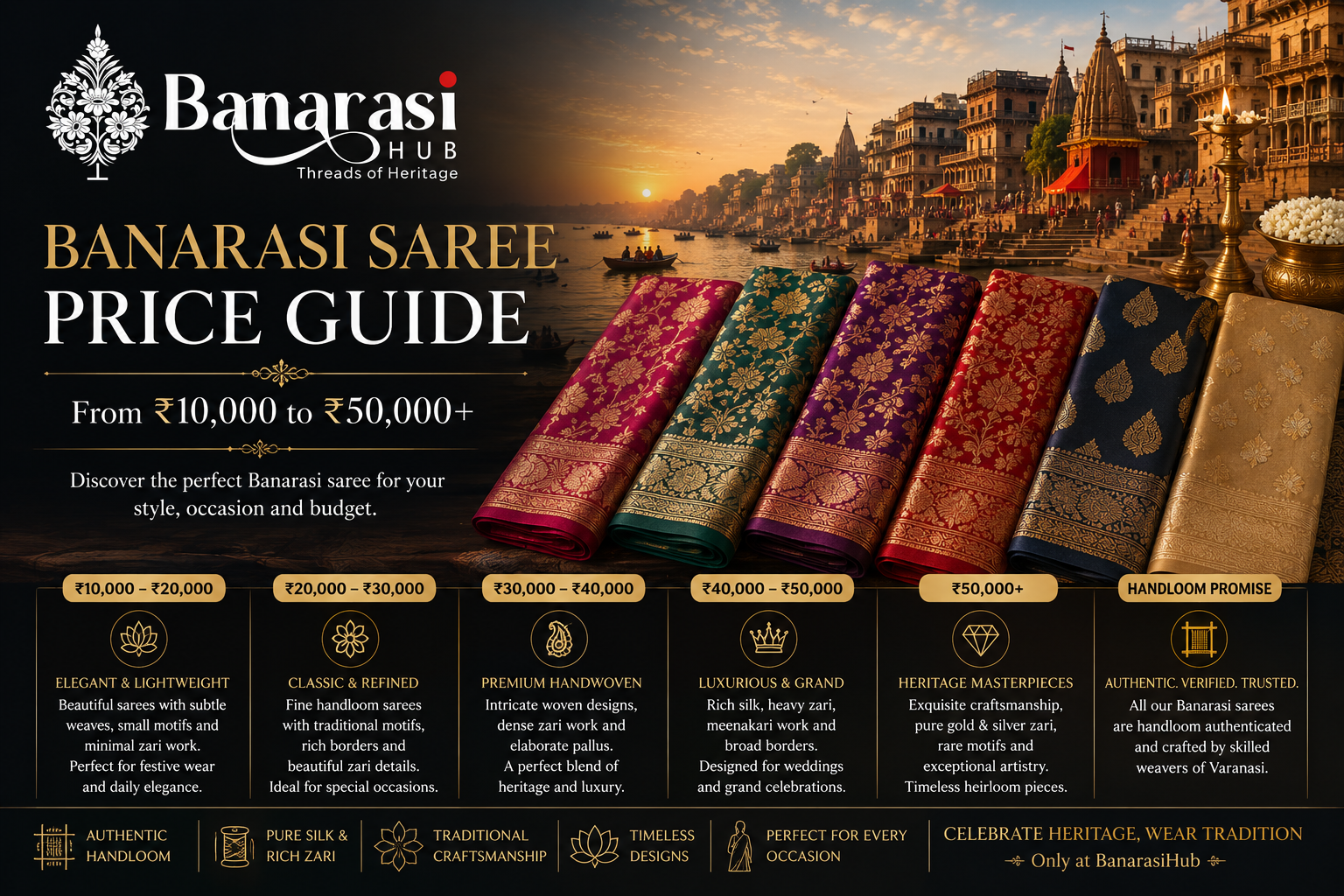
10. Set a Realistic Budget
Banarasi silk sarees are available across a wide range of prices.
The price can depend on:
* Fabric
* Weaving technique
* Zari
* Design complexity
* Motif density
* Artisan craftsmanship
* Finishing
* Brand and retail costs
Instead of deciding only on a price range, decide what matters most to you.
For example, if you are buying an heirloom saree, you may prioritise craftsmanship and intricate weaving. If you want a saree for occasional use, you may prefer a simpler design that is easier to style repeatedly.
How to Choose a Banarasi Saree Online
Online shopping offers an enormous selection, but photographs don’t always tell the complete story.
Before purchasing, check:
* Exact fabric composition
* Handloom or powerloom status
* Zari details
* Saree length and width
* Border and pallu photographs
* Close-up fabric images
* Product description
* Care instructions
* Seller’s return policy
A trustworthy seller should provide clear and accurate product information.
At BanarasiHub, we believe that customers should have the information they need to choose a saree confidently, whether they are shopping for a wedding, festival, celebration or special gift.
How to Care for Your Banarasi Silk Saree
A beautiful Banarasi silk saree deserves proper care.
Keep these basic practices in mind:
Store it in a clean, dry place. Avoid damp storage.
Use breathable fabric for storage. Traditional sarees should not be kept compressed for long periods.
Refold periodically. Changing the fold can help prevent permanent creases along the same lines.
Avoid direct sunlight for long periods. Strong sunlight can affect colours over time.
Follow professional cleaning advice. For valuable silk and zari sarees, professional dry cleaning is generally preferable to experimenting with home washing.
Final Thoughts
Choosing the perfect Banarasi silk saree is ultimately about finding the right balance between fabric, colour, zari, motifs, occasion, comfort and personal style.
For a traditional wedding, a richly woven saree with an elaborate zari border and pallu can make a stunning statement. For a reception or festive celebration, a contemporary colour with elegant motifs can provide a more modern interpretation of Banarasi tradition.
Most importantly, take time to understand what you are buying. Look carefully at the fabric, weaving, zari and finishing, and purchase from a transparent seller.
A Banarasi silk saree is not simply an item of clothing. It carries the visual language and craftsmanship of one of India’s most celebrated weaving traditions.
Discover the Banarasi silk saree collection at BanarasiHub and find a timeless weave for your next special occasion.

1 comment
You have given wonderful knowledge about banasi saree.
Prem prakash kumar
Leave a comment
This site is protected by hCaptcha and the hCaptcha Privacy Policy and Terms of Service apply.